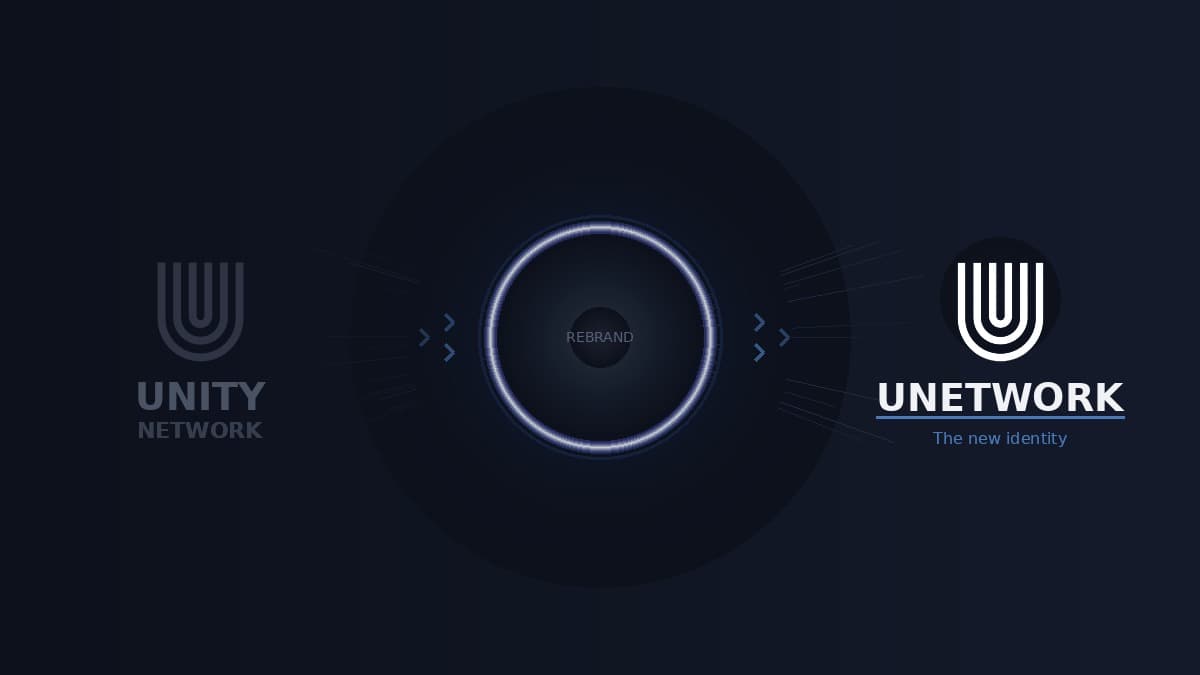
Unetwork vs Unity Network: What Changed in the Rebrand
· 15 min read · Unetwork Guide

If you have been searching for Unity Network, Unity Nodes, or unitynodes.io and ended up confused by what you found, you are not alone. Unity Network officially rebranded to Unetwork. The technology is the same. The licenses are the same. The earning model is the same. The name changed, and a few surface level things changed with it, but the underlying network that turns smartphones into telecom verification tools is identical to what it was before.
This post breaks down exactly what changed, what stayed the same, and what existing or prospective operators need to know about the transition from Unity Network to Unetwork. Whether you are a current Unity license holder wondering if your setup still works, or someone discovering this project for the first time through an old "Unity Nodes" search result, this guide covers everything.
Is Unetwork the Same as Unity Network?
Yes, Unetwork is the same project as Unity Network. The rebrand changed the name, the app branding, and the management portal URL, but the core technology, the license system, the earning mechanics, and the partnerships all carried over without modification.
Think of it like Google renaming to Alphabet. The parent structure changed its label. The search engine, the ads platform, and the cloud services all kept working exactly as they did before. Unetwork is that same kind of transition. If you held a Unity Node license on May 1, you held a Unetwork Node license on May 2. Nothing about your operational setup, your earnings split, or your task assignments changed.
The network is still built by Minutes Network. It still partners with World Mobile, Polkadot, and other blockchain ecosystems. It still performs telecom verification tasks (Caller ID Testing, SMS Verification, Scout, Runner, and Connection). It still pays operators in UPs where 1 UP equals 1 USD. Every technical detail that mattered before the rebrand matters in exactly the same way after it.
Quick summary: Unetwork = Unity Network. Same team, same tech, same licenses, same earnings. Only the branding changed.
Why Did Unity Network Rebrand to Unetwork?
Unity Network rebranded to Unetwork primarily because of name confusion with Unity Technologies, the company behind the Unity game engine. The overlap created real, measurable problems for search visibility, partner conversations, and community growth.
Consider what happened when someone searched "Unity Network" before the rebrand. Google returned a mix of results about the telecom verification project and the game engine's networking framework. Unity Technologies dominates search with billions of pages indexed. A small DePIN project competing for the same keywords was fighting a losing battle for discoverability.
The problem extended beyond search engines. When Minutes Network approached potential telecom partners, the first question was often "Are you related to the game engine company?" That confusion slowed business development. A distinct brand name eliminates that friction entirely.
There was also a trademark dimension. Unity Technologies aggressively protects its "Unity" trademark across software and technology categories. Operating under a name that could trigger trademark disputes was an unnecessary risk for a growing network with real revenue and real partners. The rebrand to Unetwork removed that legal exposure while keeping the "U" and "net" elements that the community already associated with the project.
From a branding perspective, the timing made sense. The network was expanding beyond its initial community of early adopters into mainstream DePIN awareness. Rebranding during a growth phase, rather than after reaching massive scale, meant fewer people needed to update their mental model. Better to do it with thousands of operators than with millions.
What Exactly Changed in the Rebrand?
The rebrand touched three categories: naming, the mobile app, and the management portal. Everything else, from the blockchain layer to the license structure, remained untouched.
Name and Brand Identity
The project name changed from Unity Network to Unetwork. All official communications, documentation, social media accounts, and partner facing materials now use the Unetwork name. The logo was updated. The color palette was refreshed. The website moved to unetwork.ai as the primary domain.
Community channels on Telegram, Discord, and other platforms updated their names and branding to reflect the change. Old references to "Unity Network" or "Unity Nodes" in community posts and documentation are gradually being updated, but you will still find legacy references across the internet. Those references point to the same project now called Unetwork.
The Mobile App
The mobile app previously called "Unity" is now called "Unetwork" in both the Apple App Store and Google Play Store. The app icon, splash screen, and in app branding were all updated. If you had the old Unity app installed, it updated to the Unetwork app through your normal app store update process.
The app functionality did not change. The task types are the same. The earnings dashboard looks and works the same. The license management, withdrawal process, and permissions structure are all identical. The update was cosmetic, not functional.
The Management Portal
The old management portal at unitynodes.io transitioned to the Unetwork ecosystem. Node owners who used unitynodes.io to manage their licenses, view earnings, and distribute lease codes now access equivalent functionality through manage.unetwork.io. If you bookmarked unitynodes.io, you should update that bookmark to the new URL.

What Stayed the Same After the Rebrand?
Everything that matters to your daily operations and earnings stayed exactly the same. The rebrand was a surface level change. The engine underneath is untouched.
Technology and Architecture
The decentralized edge network architecture is identical. Smartphones still function as edge nodes performing telecom verification tasks. Completed tasks still generate cryptographic proofs recorded on the blockchain. The task distribution system, the proof verification layer, and the payment processing pipeline all remained the same codebase running the same logic.
License System
A node still contains 200 operator licenses. Round 1 nodes that were purchased for $5,000 still contain their original 200 licenses. Round 2 nodes at $10,000 still contain 200 licenses. The UNO (Unetwork Node Owner, formerly Unity Node Owner) and ULO (Unetwork License Operator, formerly Unity License Operator) roles are functionally unchanged. The acronyms still work because the "U" was preserved in the rebrand.
Revenue Splits
The three standard lease splits remain: 50/50, 40/60, and 30/70 (node owner/operator). If you had a license leased at a 40/60 split before the rebrand, it is still at 40/60. No splits were modified, reset, or renegotiated as part of the transition.
Earnings and Withdrawal
UPs (Unetwork Points, formerly Unity Points) still maintain the 1 UP equals 1 USD peg. Withdrawal minimums ($5), per withdrawal caps ($150), and supported chains (Ethereum, Binance Smart Chain, Solana, XRP, Cardano) are all unchanged. Your earnings history and accumulated UPs carried over seamlessly.
Task Types
All five task types continue operating as before:
| Task | Type | Description | Changed? |
|---|---|---|---|
| Caller ID Testing | Active | Verifies caller ID data across carrier boundaries | No |
| SMS Verification | Active | Tests message delivery, timing, and content integrity | No |
| Scout | Active (walking) | Maps network coverage on foot with GPS and signal data | No |
| Runner | Active (driving) | Maps coverage at vehicle speeds, tests tower handoffs | No |
| Connection | Passive | Measures latency, speeds, and availability in background | No |
Partnerships
World Mobile, Polkadot, and all other ecosystem partners continued their relationships through the rebrand. Minutes Network, the parent company building Unetwork, maintained all existing contracts and integrations. Partner facing APIs, data feeds, and reporting structures were not affected.
Do Existing Unity Operators Need to Do Anything?
Existing operators need to do very little. The transition was designed to be as seamless as possible. In most cases, the app updated automatically and your license continued earning without interruption.
Here is the short checklist for current operators:
- Update the app.If your app store did not auto update, manually update to the latest version. The app name in your app store should now show "Unetwork" instead of "Unity."
- Update bookmarks. If you had unitynodes.io or any old Unity Network URLs bookmarked, update them to manage.unetwork.io.
- Verify your license is active. Open the Unetwork app and confirm your license shows as active with the correct split ratio. In virtually all cases it should, but it takes 30 seconds to verify.
- Continue as normal. Your tasks, earnings, and withdrawal methods are unchanged. Keep your phone connected. Keep earning.
If you are a UNO (node owner) who distributed lease codes before the rebrand, those codes still work. You do not need to generate new codes or redistribute them to your operators. The lease code format and activation process are the same.
Bottom line: if your app is updated and your license shows active, you are done. No migration, no re registration, no new codes needed.
What Happened to unitynodes.io?
The unitynodes.io domain was the original management portal where node owners could view their licenses, track earnings, generate lease codes, and manage operator assignments. With the rebrand, that functionality moved to the Unetwork ecosystem.
If you visit unitynodes.io today, you may encounter a redirect to the new portal. The core management features that unitynodes.io provided are now accessible at manage.unetwork.io.
For node owners who relied on unitynodes.io daily, the transition requires updating one bookmark. The dashboard layout, the license management tools, and the earnings reporting all function as before. Your historical data (earnings, lease code usage, operator assignments) carried over to the new platform.
If you encounter any broken links or references to unitynodes.io in older community guides, documentation, or forum posts, know that those instructions still apply. Just use manage.unetwork.io instead of the unitynodes.io URL.

How Does the Unetwork App Differ from the Old Unity App?
The Unetwork app is the same app with updated branding. Under the hood, the codebase, task engine, and blockchain integration are unchanged. The differences are entirely cosmetic.
Visual Changes
The app icon changed from the Unity Network logo to the Unetwork logo. The splash screen on launch now displays the Unetwork brand. In app headers, footers, and navigation elements reference "Unetwork" instead of "Unity." Color accents and typography were refreshed to match the new brand guidelines.
App Store Listing
The app listing in Apple App Store and Google Play Store now shows "Unetwork" as the app name. The description and screenshots were updated. If you search for "Unity Network" in app stores, you may or may not find the Unetwork app in results depending on how app store search indexes legacy names. Search for "Unetwork" directly for the most reliable result.
Functionality Comparison
| Feature | Old Unity App | Current Unetwork App |
|---|---|---|
| Task types available | 5 (Caller ID, SMS, Scout, Runner, Connection) | 5 (Caller ID, SMS, Scout, Runner, Connection) |
| License activation | Enter lease code in app | Enter lease code in app |
| Earnings dashboard | UPs balance, task history, uptime | UPs balance, task history, uptime |
| Withdrawal | $5 min, $150 max per withdrawal | $5 min, $150 max per withdrawal |
| Supported chains | ETH, BSC, SOL, XRP, ADA | ETH, BSC, SOL, XRP, ADA |
| Background operation | Yes | Yes |
| Permissions required | Location, Phone, SMS | Location, Phone, SMS |
As the table shows, there is no functional difference. If someone handed you the old Unity app and the new Unetwork app side by side with the branding stripped out, you would not be able to tell them apart. The rebrand was a skin change, not an engine overhaul.

What Are UNO and ULO Roles in the Unetwork Ecosystem?
UNO stands for Unetwork Node Owner (previously Unity Node Owner). ULO stands for Unetwork License Operator (previously Unity License Operator). These two roles form the operational backbone of the network and their structure was not changed by the rebrand.
UNO: Unetwork Node Owner
A UNO is someone who purchased a node. Each node contains 200 operator licenses. Round 1 nodes cost $5,000. Round 2 nodes cost $10,000. The UNO owns those 200 licenses and decides how to deploy them.
Some UNOs operate all 200 licenses themselves across multiple devices. This requires having 200 smartphones (or at least enough devices to run licenses actively), which is impractical for most individuals. The more common approach is for UNOs to lease their licenses to operators (ULOs) and collect a percentage of the earnings.
ULO: Unetwork License Operator
A ULO is someone who leases one or more licenses from a node owner and runs them on their phone. The ULO does not need to purchase a node. They simply need a lease code from a UNO, a smartphone with mobile data, and the Unetwork app installed.
This role is particularly popular in the Philippines, India, Nigeria, Kenya, and Thailand, where operators can earn meaningful local income by running licenses on phones they already own. The barrier to entry for a ULO is essentially zero. No upfront investment beyond the data plan you likely already pay for.
How the UNO/ULO Relationship Works
The UNO generates lease codes through the management portal and shares them with ULOs. When a ULO enters a lease code in the Unetwork app, the license binds to their device and the agreed revenue split takes effect automatically.
| Split | UNO (Node Owner) Gets | ULO (Operator) Gets | Best For |
|---|---|---|---|
| 50/50 | 50% | 50% | Most common, balanced risk |
| 40/60 | 40% | 60% | Attracting reliable operators in high demand regions |
| 30/70 | 30% | 70% | Premium task regions, top uptime operators |
The terminology update from "Unity" to "Unetwork" was seamless for the UNO and ULO acronyms because the "U" was preserved. UNO still means node owner. ULO still means license operator. Community members do not even need to adjust how they refer to these roles in conversation.
Ready to Claim a Unetwork License?
Browse available lease codes with 50/50, 40/60, and 30/70 splits. Copy a code, enter it in the Unetwork app, and start earning UPs today.
Claim a LicenseHow Does the Rebrand Affect Search Results and Old Links?
The rebrand creates a temporary period where search results for "Unity Network," "Unity Nodes," and related terms will show a mix of old and new branding. This is normal and expected. Over the coming months, search engines will re index content under the Unetwork name.
If you found this page by searching for "unity nodes," "unity network," or "unitynodes.io," that is exactly the scenario this post addresses. You found the right project. It is now called Unetwork. Everything you read about Unity Network in older articles, YouTube videos, Telegram discussions, and forum posts still applies. Just mentally replace "Unity" with "Unetwork" and the information is current.
For website operators and bloggers who have published content about Unity Network, updating references to Unetwork helps readers avoid confusion. The core facts about how the network works, what tasks it performs, and how licensing operates are all the same. Only the name needs updating.
Is Unetwork Still a Good Opportunity After the Rebrand?
The rebrand does not change the fundamental value proposition. Unetwork is still one of the only DePIN projects where the work performed by participants has genuine commercial value. Telecom companies need network verification data. They are willing to pay for it. Unetwork provides it through a distributed network of smartphone operators. Our complete guide to Unetwork covers the full technology stack and earning model.
What has changed is positioning. With a distinct brand name, Unetwork can build search authority without competing against Unity Technologies. Marketing efforts, partnership announcements, and community growth initiatives now happen under a brand that is uniquely theirs. This should accelerate awareness and adoption over time.
For prospective operators, the opportunity looks the same as it did before the rebrand. Leasing a license costs nothing upfront. You use your existing phone and data plan. Earnings are modest but real, with 1 UP pegged to 1 USD and straightforward crypto withdrawals. Operators in developing markets (Philippines, India, Nigeria, Kenya, Thailand) see the strongest task availability and the most meaningful local income from those earnings.
For prospective node owners considering a $10,000 Round 2 purchase, the rebrand is a net positive signal. It shows the team is thinking about long term brand positioning, reducing legal risk, and building an identity that can scale. These are signs of a project that plans to be around for years, not months.
The current earning rate of approximately $48 per month for a full 200 license node at 50% uptime gives a long breakeven timeline on a $10,000 investment. The bet is on increasing task volumes as more telecom partners join. That is a reasonable expectation given the trajectory of the DePIN sector, but nothing is guaranteed. Start with a leased license to experience the network firsthand before making a node purchase.
A Timeline of the Unity Network to Unetwork Transition
Here is a condensed overview of the key milestones in the transition from Unity Network to Unetwork:
| Phase | What Happened |
|---|---|
| Pre Rebrand | Network operated as Unity Network. Management portal at unitynodes.io. App listed as "Unity" in app stores. |
| Announcement | Minutes Network announced the rebrand to Unetwork, citing brand confusion with Unity Technologies and the need for a distinct identity. |
| App Update | Mobile app updated to Unetwork branding. App store listings changed. Existing installs updated via normal app store process. |
| Portal Migration | Management portal transitioned from unitynodes.io to manage.unetwork.io. All node owner data, license records, and earnings history migrated. |
| Current State | Fully operating as Unetwork. Old Unity references being gradually updated across community channels, documentation, and third party content. |
Common Misconceptions About the Rebrand
Several misunderstandings have circulated in community channels. Let us clear them up.
"The rebrand means the project is struggling." Incorrect. Rebranding to avoid trademark conflicts and improve search discoverability is standard practice for growing technology companies. It signals strategic thinking, not desperation.
"My old Unity licenses are worthless now." Completely false. All licenses carried over with zero changes. Your license is worth exactly what it was before. The label changed, not the asset.
"I need to buy new licenses under the Unetwork name." No. Your existing licenses are already Unetwork licenses. There is no separate purchase or migration required.
"The earnings model changed with the rebrand." It did not. UPs are still pegged 1:1 to USD. Task types are the same. Revenue splits are the same. Withdrawal limits and supported chains are the same.
"Unetwork is a fork or competitor of Unity Network." No. Unetwork is Unity Network. It is the same team at Minutes Network, the same codebase, the same blockchain layer, and the same partnership network. There was no split, fork, or competing project created.
How to Get Started with Unetwork Today
Whether you are a former Unity Network user or completely new to the project, getting started with Unetwork is straightforward.
For new operators:
- Download the Unetwork app from the Apple App Store or Google Play Store.
- Create an account with your email address.
- Get a lease code from a node owner. You can find available codes in our license directory with splits of 50/50, 40/60, or 30/70.
- Enter the lease code in the app under the License section.
- Grant all requested permissions (Location, Phone, SMS) for maximum earning potential.
- Keep the app running. Tasks are assigned automatically, and earnings accumulate in your UPs balance.
For former Unity operators:
- Make sure your app is updated to the latest Unetwork version.
- Verify your license shows as active in the app.
- Update any bookmarks from unitynodes.io to manage.unetwork.io.
- Continue earning as normal. Nothing else needs to change.
The entire setup process takes about 10 minutes. You need a smartphone with mobile data. No special hardware, no mining rigs, no technical knowledge. The app handles everything in the background. For a detailed walkthrough, see our step by step activation guide.
Claim a Unetwork License and Start Earning
Browse our license directory for available lease codes. Pick your preferred split, enter the code in the Unetwork app, and join the network today.
Claim a LicenseFrequently Asked Questions
Is Unetwork the same as Unity Network?
Yes. Unetwork is the official rebranded name of Unity Network. The technology, licenses, earnings model, and partnerships are all identical. Only the name, app branding, and management portal URL changed. If you held a Unity license, you now hold a Unetwork license with no action required.
Why did Unity Network change its name to Unetwork?
The primary reason was brand confusion with Unity Technologies, the company behind the Unity game engine. The name overlap hurt search visibility, complicated partner conversations, and created potential trademark risk. Unetwork gives the project a distinct identity while keeping the "U" and "net" elements the community recognized.
Do I need to re register or get new license codes after the rebrand?
No. All existing licenses, lease codes, and operator assignments carried over automatically. If your Unetwork app is updated and your license shows as active, you are fully operational. No migration, re registration, or new codes needed.
What happened to the unitynodes.io website?
The unitynodes.io management portal has transitioned to manage.unetwork.io. Node owners can access the same license management, earnings tracking, and lease code generation features there. All historical data was migrated.
Did the UNO and ULO roles change?
No. UNO still stands for node owner (now Unetwork Node Owner instead of Unity Node Owner) and ULO still stands for license operator (now Unetwork License Operator instead of Unity License Operator). The roles, responsibilities, and revenue splits are unchanged. The "U" prefix was preserved intentionally so the acronyms remained the same.
Are my Unity Network earnings safe after the rebrand?
Yes. All earnings history, accumulated UPs, and withdrawal records carried over to the Unetwork platform. UPs maintain their 1:1 peg to USD. Withdrawal minimums ($5), per transaction caps ($150), and supported chains (Ethereum, Binance Smart Chain, Solana, XRP, Cardano) are all unchanged.
Can I still find information about Unity Network online?
Yes, but older content referencing Unity Network, Unity Nodes, or unitynodes.io refers to what is now Unetwork. The technical information in those older resources is still accurate. Just replace "Unity" with "Unetwork" when following instructions or navigating to URLs.
How do I get a Unetwork license if I am new?
Download the Unetwork app from the Apple App Store or Google Play Store, create an account, and enter a lease code from a node owner. You can find available lease codes with various revenue splits (50/50, 40/60, 30/70) in the Unetwork License directory. The setup process takes about 10 minutes.